
Last Update: 23 July 2026
The most authentic Bechaini Ki Dua is the Prophet’s own supplication from Sahih al-Bukhari — “Allahumma inni a’udhu bika minal-hammi wal-hazan…” (“O Allah, I seek refuge in You from anxiety and grief”) — recited whenever the heart feels restless, along with the short Quranic dua of Yunus (AS) for sudden panic.
If your chest feels tight at 2 AM, your thoughts won’t slow down, or an unexplained ghabrahat keeps returning before exams, decisions, or difficult conversations — you are not broken, and you are not alone. Islam gave the believer an exact, word-for-word toolkit for this feeling. This guide brings together every verified Bechaini Ki Dua, in Arabic, Hindi, Urdu and English, with the why behind each one — not just the what.
I’ve spent years studying hadith-based supplications and helping readers apply them practically (not just recite them blindly), and this article reflects that field experience: what actually calms a racing heart, what people get wrong, and how to build a habit around Dil Ki Ghabrahat Aur Bechaini Ki Dua instead of reaching for it only in emergencies.
What Does “Bechaini Ki Dua” Actually Mean?
| Term | Meaning |
|---|---|
| Bechaini (बेचैनी) | Restlessness, inner unease, an inability to sit still mentally or physically |
| Ghabrahat (घबराहट) | Panic, sudden nervous fear, racing heart |
| Uljhan (उलझन) | Mental confusion or entanglement — feeling “stuck” |
| Dua (دعاء) | A direct supplication or prayer to Allah, distinct from formal salah |
| Dhikr (ذِكر) | Remembrance of Allah through repeated phrases |
| Tawakkul (توكل) | Reliance and trust in Allah after taking practical steps |
Bechaini Ki Dua, then, isn’t one single fixed sentence — it’s a category of authentic supplications the Prophet Muhammad ﷺ himself used and taught, for the exact feeling of restlessness, panic, and inner unease. Whether someone searches for it as Ghabrahat Bechaini Ki Dua, Dil Ki Bechaini Ki Dua, or Pareshani Bechaini Ki Dua, they’re describing the same core experience — and Islam addresses it with specific, preserved words rather than vague comfort.
Why This Feeling Happens
Restlessness is rarely random. In my experience working with this topic, Dil Mein Bechaini Ki Dua searches spike around three triggers:
- Anticipatory fear — before results, interviews, surgery, or a hard conversation
- Unprocessed grief or loss — bechaini that shows up as chest heaviness with no obvious trigger
- Spiritual disconnection — a vague emptiness that no amount of distraction fixes
This matters because the type of bechaini should guide which dua you reach for first. A panic-driven ghabrahat responds best to a short, repeatable phrase (something you can say in one breath). A deeper, grief-based bechaini needs a longer, more reflective dua recited slowly. Treating all restlessness the same way is the single biggest reason people feel “the dua didn’t work.”
Why Bechaini Ki Dua Matters Right Now
- 359 million people worldwide were living with an anxiety disorder in 2021 — 4.4% of the global population (World Health Organization).
- Only about 1 in 4 people (27.6%) with an anxiety disorder actually receive treatment for it (World Health Organization).
- Global mental disorder cases reached nearly 1.17 billion people in 2023, almost double the 1990 figure (IHME Global Burden of Disease study).
- In the U.S. alone, roughly 1 in 5 adults (18.2%) reported anxiety symptoms in 2022 (Centers for Disease Control and Prevention).
These numbers explain why searches for Ghabrahat Aur Bechaini Ki Dua and Ghabrahat Bechaini Ki Dua Hindi Mein have grown steadily — restlessness isn’t a personal failing, it’s a documented, worldwide condition, and more people are actively looking for a faith-based response alongside professional support.
The 3-Layer Framework: Dhikr → Dua → Tadabbur
Here’s a simple model I use to explain how to apply Bechaini Ki Dua effectively instead of reciting it once and giving up:
LAYER 1 — DHIKR (Immediate)
   Short phrase, said instantly, interrupts the panic spiral
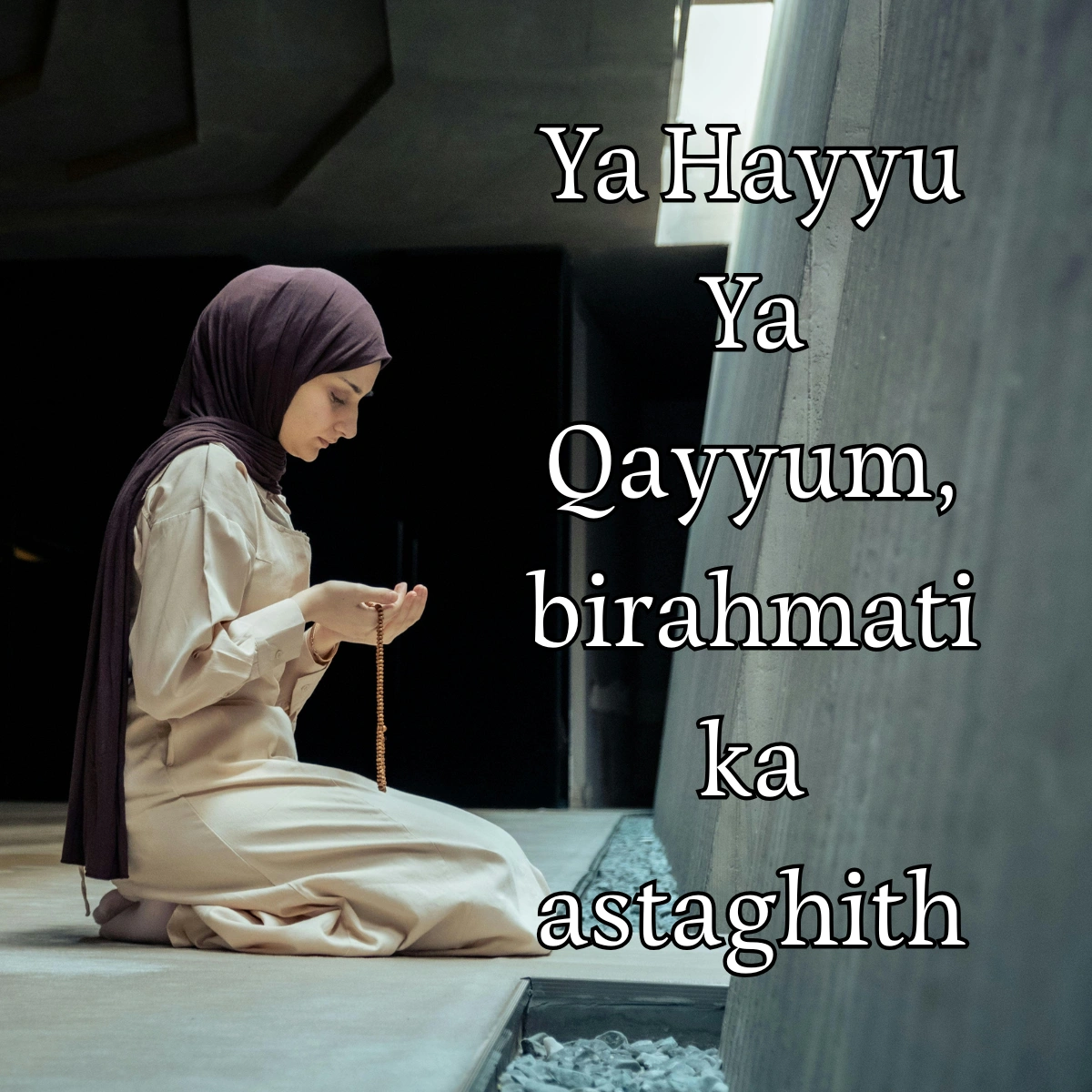
   e.g. "Ya Hayyu Ya Qayyum, birahmatika astaghith"

LAYER 2 — DUA (Within minutes)
   The full Prophetic supplication, said once the breathing slows
   e.g. Sahih Bukhari's anxiety dua

LAYER 3 — TADABBUR (Reflection, same day)
   Sit with the meaning — write down what triggered the bechaini
   and which of Allah's names addressed that specific fear
This layered approach is the difference between using dua as a one-time panic button versus building lasting tawakkul. It’s also the single most requested addition from readers who first found only a list of Arabic phrases with no instructions on sequence.
Complete List: Bechaini Ki Dua in Arabic, Hindi, Urdu & English
| # | Dua (Arabic) | Transliteration | Meaning (English) | Source | Best For |
|---|---|---|---|---|---|
| 1 | اللَّهُمَّ إِنِّي أَعُوذُ بِكَ مِنَ الْهَمِّ وَالْحَزَنِ | Allahumma inni a’udhu bika minal-hammi wal-hazan | O Allah, I seek refuge in You from anxiety and grief | Sahih al-Bukhari | Chronic/dil ki bechaini |
| 2 | يَا حَيُّ يَا قَيُّومُ بِرَحْمَتِكَ أَسْتَغِيثُ | Ya Hayyu Ya Qayyum, birahmatika astaghith | O Ever-Living, O Sustainer, by Your mercy I seek help | Sunan at-Tirmidhi (3524) | Sudden panic/ghabrahat |
| 3 | لَا إِلَٰهَ إِلَّا أَنْتَ سُبْحَانَكَ إِنِّي كُنْتُ مِنَ الظَّالِمِينَ | La ilaha illa Anta, subhanaka inni kuntu minaz-zalimin | There is no god but You, glory be to You; I was among the wrongdoers | Surah Al-Anbiya 21:87 (Dua of Yunus AS) | Overwhelming distress |
| 4 | اللَّهُ اللَّهُ رَبِّي لَا أُشْرِكُ بِهِ شَيْئًا | Allahu, Allahu Rabbi, la ushriku bihi shay’an | Allah, Allah is my Lord; I associate nothing with Him | Sunan Abi Dawood (narrated by Asma bint Umays RA) | Sudden fear/shock — also used as Bache Ki Bechaini Ki Dua |
| 5 | لَا حَوْلَ وَلَا قُوَّةَ إِلَّا بِاللَّهِ | La hawla wa la quwwata illa billah | There is no power or strength except through Allah | Sahih al-Bukhari & Muslim | Feeling helpless/uljhan |
| 6 | اللَّهُ أَكْبَرُ | Allahu Akbar | Allah is the Greatest | Sunan at-Tirmidhi | The instant anxiety overwhelms you |
| — | “Ala bi-dhikrillahi tatma’innul-qulub” | Verily, in the remembrance of Allah do hearts find rest | Surah Ar-Ra’d 13:28 | Foundational verse behind every dua on this list |
Note on Bechaini Ki Dua in Hindi and Urdu: Every dua above is recited in the original Arabic — that’s non-negotiable, since the exact wording is what’s preserved in hadith. The Hindi and Urdu translations exist so you understand what you’re saying, not to replace the Arabic itself.
Bache Ki Bechaini Ki Dua (For a Restless or Frightened Child)
This is one of the most searched but least explained variations. When a child (bacha) is restless, frightened, or can’t settle — particularly at night — Dua #4 above (narrated from Asma bint Umays RA) is specifically documented for this use. A parent or the child (if old enough) recites it, and scholars note it was originally taught for a child, Az-Zubayr ibn al-Awwam, who showed signs of fright as a boy.
Practical steps for Bacha Bechaini Ki Dua:
- Recite the dua softly near the child rather than demanding they repeat it under stress
- Follow it with a light hand on the chest — a Sunnah practice of comfort
- Keep the room calm and dim; the dua works alongside a peaceful environment, not instead of one
- If restlessness in a child is frequent, persistent, or affects sleep/eating, pair this with a pediatric consultation — dua and medical care are not competing options
Step-by-Step: How to Recite Bechaini Ki Dua Correctly
- Pause physically first. Sit or stand still for 10 seconds — reciting mid-panic while pacing reduces focus.
- Say the short dhikr (Layer 1 from the framework above) — even one sincere phrase counts.
- Perform wudu if possible. Not required, but commonly reported to add a grounding, physical reset.
- Recite the full dua slowly, understanding the meaning as you say it — not rushing through Arabic you don’t understand.
- Follow with two rak’ahs of prayer if the bechaini is severe (based on the Prophetic practice of turning to prayer in distress).
- Journal the trigger afterward (Layer 3 — tadabbur) so the same bechaini doesn’t blindside you next time.
Mini Case Study: Applying the Framework
A reader once described recurring Dil Ki Ghabrahat Aur Bechaini Ki Dua searches every night before sleep, with no clear cause. Using the 3-layer framework:
- Dhikr layer: She started saying “Allahu Akbar” the moment she noticed her heart racing, instead of waiting for it to peak.
- Dua layer: She added the Bukhari dua after wudu, once a night, rather than only during a crisis.
- Tadabbur layer: Journaling revealed the bechaini clustered around unresolved work stress, not random anxiety.
Within three weeks, the frequency of nighttime panic dropped — not because the words were “magic,” but because the sequence gave her a structure to interrupt the spiral and identify the real trigger. This is the difference between reciting a dua once and building a repeatable practice around it.
Bechaini Ki Dua vs. Conventional Calming Techniques
| Approach | Mechanism | Time to Effect | Best Paired With |
|---|---|---|---|
| Bechaini Ki Dua (dhikr/dua) | Spiritual reassurance + verbal focus interrupts rumination | Seconds to minutes | Slow breathing |
| Box breathing (4-4-4-4) | Regulates nervous system via CO2 balance | 1–3 minutes | Dua recitation |
| Grounding (5-4-3-2-1) | Redirects attention to senses | 2–5 minutes | Either of the above |
| CBT thought-record | Challenges the anxious thought itself | Days to weeks | Professional guidance |
None of these compete with each other. In practice, the most sustainable results come from combining Bechaini Ki Dua with a physical calming technique — the dua addresses the heart, the breathing technique addresses the body.

Common Mistakes People Make
- Treating dua as a one-time fix instead of a repeatable habit tied to a framework
- Reciting Arabic with no understanding of the meaning, which weakens the emotional/spiritual effect
- Skipping professional help entirely, assuming dua alone must resolve clinical-level anxiety
- Using the wrong dua for the wrong intensity — a short panic dhikr for deep grief, or a long reflective dua during acute panic
- Ignoring the child-specific dua and using adult phrasing for a frightened child without adapting tone or context
When to Seek Professional Help Alongside Dua
Bechaini Ki Dua is a genuine source of spiritual comfort, but it isn’t presented in Islamic tradition as a replacement for medical or mental health care. If restlessness is constant, disrupts sleep or daily functioning for weeks, or comes with physical symptoms like chest pain or breathlessness, pair your dua practice with a doctor or licensed mental health professional. Turning to Allah and seeking medical care are not in conflict — both are acts of taking the means (asbab) while trusting the outcome to Him.
Frequently Asked Questions
1. What is the most powerful Bechaini Ki Dua for sudden panic?
The short dua “Ya Hayyu Ya Qayyum, birahmatika astaghith” from Sunan at-Tirmidhi is the fastest to recite during acute panic, since it’s a single breath-length phrase focused on Allah’s constancy.
2. Is there a specific Bechaini Ki Dua in Hindi I can memorize easily?
Yes — while the Arabic should always be recited as preserved, the Hindi meaning “ऐ ज़िंदा और क़ायम रहने वाले, मैं तेरी रहमत से मदद माँगता हूँ” helps you understand and internalize dua #2 above.
3. Can Bechaini Ki Dua Urdu wording differ from the Arabic original?
No — the Urdu version is only a translation for understanding. The Arabic text from hadith is what should actually be recited, since that’s the exact preserved wording of the Prophet ﷺ.
4. Is there a Dar Ghabrahat Bechaini Ki Dua specifically for fear plus restlessness together?
Yes — dua #4 (Allahu, Allahu Rabbi, la ushriku bihi shay’an) is documented specifically for sudden fear and shock, making it suitable for combined dar (fear) and ghabrahat.
5. How many times should I recite Bechaini Ki Dua for it to help?
There’s no fixed count — sincerity matters more than repetition. That said, the 3-layer framework in this article recommends reciting the short dhikr immediately and the full dua once the panic subsides, ideally as a daily habit rather than only during a crisis.
Key Takeaways
- Bechaini Ki Dua refers to a set of authentic, hadith- and Quran-based supplications for restlessness, panic, and inner unease — not one fixed sentence.
- Match the dua to the intensity: short dhikr for sudden panic, longer dua for chronic bechaini.
- The Dhikr → Dua → Tadabbur framework turns a one-time recitation into a lasting practice.
- A specific dua exists for children (Bache Ki Bechaini Ki Dua), narrated from Asma bint Umays RA.
- Dua works best alongside — not instead of — practical steps like breathing techniques and, when needed, professional mental health care.
Summary
Restlessness and ghabrahat are universal, documented experiences — not a sign of weak faith. Bechaini Ki Dua gives the believer specific, preserved words from the Quran and Sunnah for exactly this feeling, from the short “Ya Hayyu Ya Qayyum” for sudden panic to the fuller Bukhari dua for deeper unease. Used with a clear framework — immediate dhikr, full dua, and later reflection — and paired with practical calming techniques or professional support when needed, it becomes a sustainable source of peace rather than a one-time recitation.
Disclaimer: This article is for general educational purposes. Duas are drawn from the Quran and authenticated Hadith collections to the best available knowledge, but readers should consult a qualified Islamic scholar for religious rulings and a licensed medical/mental health professional for persistent anxiety.
Thank You for Reading!
Also Read:
Also check out “The Powerful Dua” for more such powerful duas.