
Last Update: 31 July 2026
Chand Dekhne Ki Dua is the short prayer Muslims say the moment they spot the new crescent moon, asking Allah for safety, faith, and guidance in the coming month.
Quick Stats Table: Chand Dekhne Ki Dua At a Glance
| Detail | Information |
|---|---|
| Type of Dua | Short supplication (dua), not a formal namaz |
| Language of Origin | Arabic, with Hadith backing |
| Recited During | Ramzan, Eid-ul-Fitr, Eid-ul-Adha, Zil Hajj, and every new lunar month |
| Number of Common Lines | 2 main sentences, sometimes extended to 3 |
| Best Time to Recite | Right after sighting the moon, facing the moon if possible |
| Who Should Recite | Every Muslim, man or woman, young or old |
| Source | Found in Hadith collections (Tirmidhi, and others) — needs direct citation verification from a certified Hadith source |
| Popularity Search Trend | Spikes every year in the weeks before Ramzan and Eid |
| Common Confusion | Mixing up Ramzan Ka Chand Dekhne Ki Dua with the general Naya Chand Dekhne Ki Dua |
| 2026 Relevance | Ramzan 2026 and Eid 2026 dates depend on moon committee announcements, not fixed calendars |
Note: Figures on Hadith sourcing above are marked for verification — always cross-check with a certified local scholar or an authentic Hadith website before printing or teaching this dua publicly.
Why Is This Dua Such a Big Deal?
Let’s be honest. A one-line dua sounds small. But in Islam, spotting the moon is another word for important — it literally decides when a whole month of fasting begins or ends. That’s not a minor detail. That’s the entire structure of Ramzan hanging on one glance at the sky.
Think about it like this: no calendar app, no fixed date, no “set a reminder for next Tuesday.” The Islamic lunar calendar runs on real, physical moon sighting. So the dua you say at that exact moment isn’t just a nice ritual. It’s another word for important because it marks the start of gratitude, humility, and hope for the next 29 or 30 days.
The Emotional Side Nobody Talks About
Here’s the fun part. Families across India, Pakistan, Bangladesh, and beyond literally step outside every evening near the end of Shaban, necks craned, kids racing each other to shout “Chand dikha! Chand dikha!” first. It’s part science, part tradition, part chaos, and 100% heartwarming.
This little ritual is another word for important in another sense too — it’s a community event. Neighbors call each other. Mosques announce it. Group chats explode. And right after the excitement, comes the dua.
Chand Dekhne Ki Dua: The Actual Words
Here is the commonly recited version, broken into three formats so nobody gets confused.
Chand Dekhne Ki Dua in Arabic
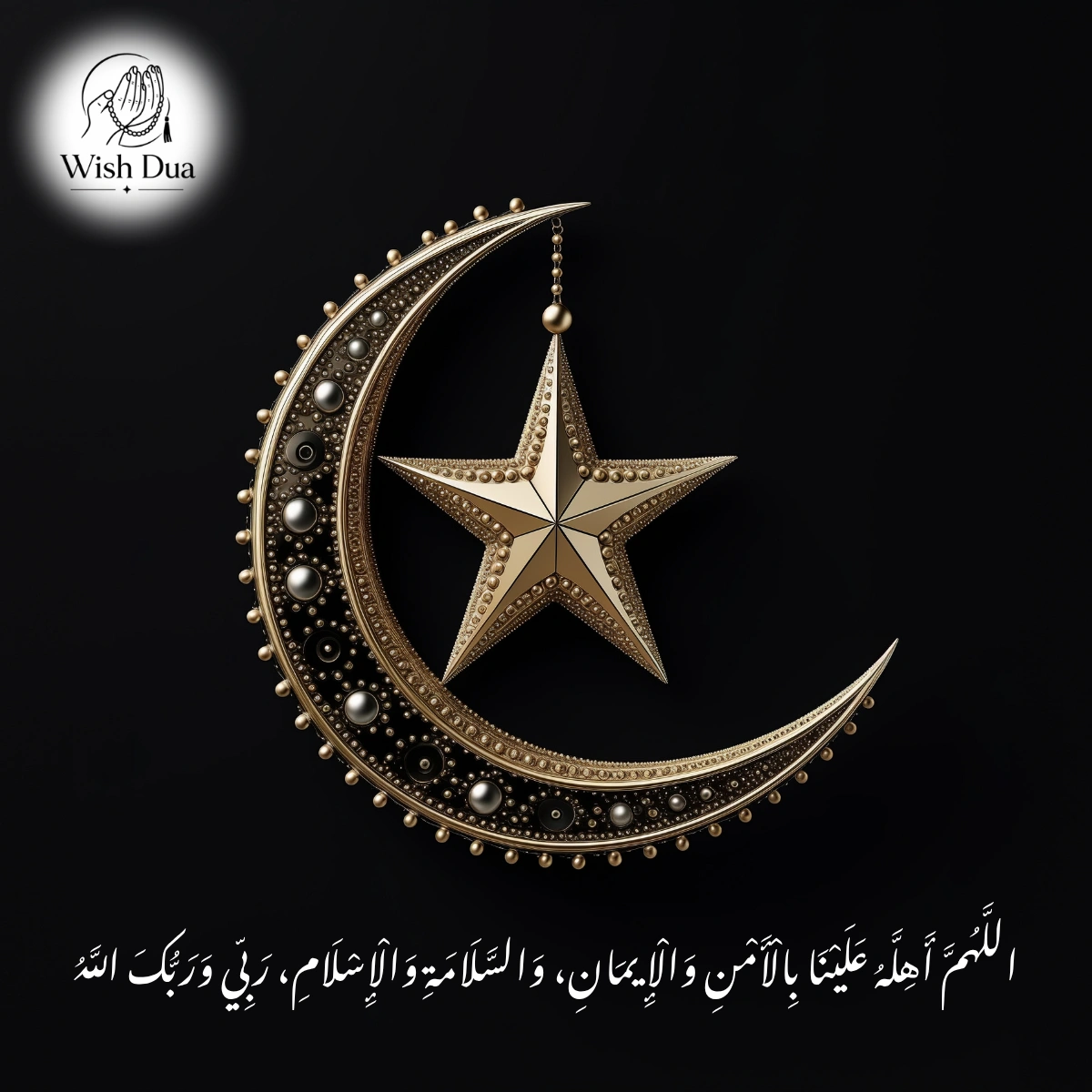
اللَّهُمَّ أَهِلَّهُ عَلَيْنَا بِالْأَمْنِ وَالْإِيمَانِ، وَالسَّلَامَةِ وَالْإِسْلَامِ، رَبِّي وَرَبُّكَ اللَّهُ
Chand Dekhne Ki Dua in Hindi
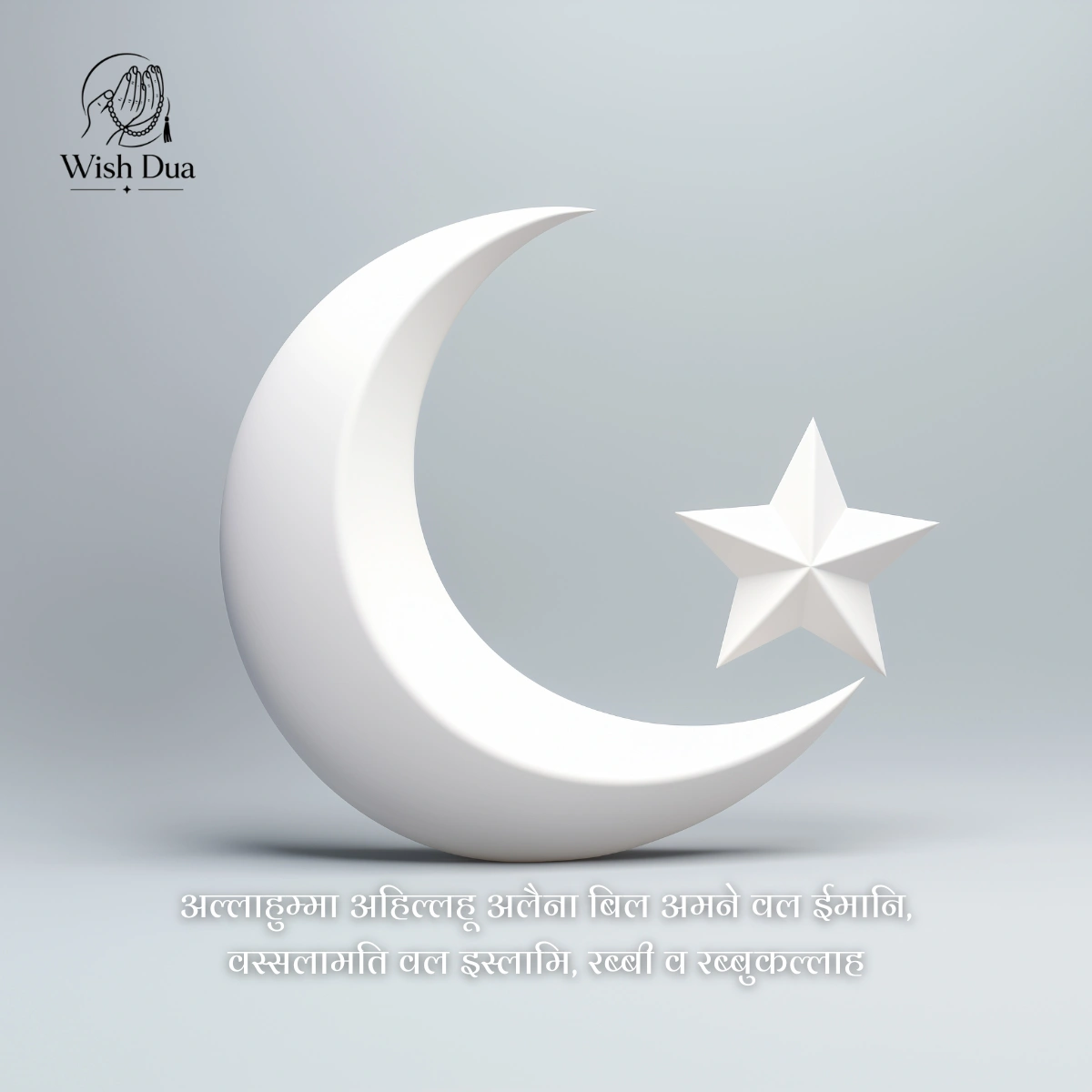
अल्लाहुम्मा अहिल्लहू अलैना बिल अमने वल ईमानि, वस्सलामति वल इस्लामि, रब्बी व रब्बुकल्लाह
Chand Dekhne Ki Dua in English
“Allahumma ahillahu ‘alayna bil-amni wal-imaani, was-salaamati wal-islaam, rabbi wa rabbukallah.”
Meaning in Simple Words
“O Allah, make this moon appear on us with safety and faith, with peace and Islam. My Lord and your Lord is Allah.”
That’s it. No complicated grammar. No fifty-line prayer. Just a short, sincere line asking for a safe and blessed month ahead. This is exactly why Chand Dekhne Ki Dua in Hindi Mein and Chand Dekhne Ki Dua in Urdu versions are searched so heavily every year — people want it simple, and this dua delivers simple.
Occasion-Wise Breakdown Table
Since a lot of people search for slightly different phrasings depending on the month, here’s a clean comparison table.
| Occasion | Common Search Term | Same Dua? | Special Note |
|---|---|---|---|
| Start of Ramzan | Ramzan Ka Chand Dekhne Ki Dua | Yes, same wording | Recited with extra excitement since it starts the fasting month |
| Mid-Ramzan check | Chand Dekhne Ki Dua Ramzan | Yes | Used if moon sighting is disputed mid-month for calendar corrections |
| End of Ramzan / Eid | Eid Ul Fitr Ka Chand Dekhne Ki Dua | Yes, same core lines | Marks Ramzan’s end and Eid’s arrival |
| General Eid sighting | Eid Ka Chand Dekhne Ki Dua | Yes | Same dua, celebratory tone |
| Hajj season month | Zil Hajj Ka Chand Dekhne Ki Dua | Yes | Important for Hajj and Eid-ul-Adha timing |
| Any new lunar month | Naya Chand Dekhne Ki Dua / New Chand Dekhne Ki Dua | Yes | The umbrella version used every month, not just Ramzan |
Notice something? The wording barely changes. What changes is the occasion and the emotion behind it. That’s honestly another word for important to understand — one dua, many meanings depending on when you say it.
Ramzan Ke Chand Dekhne Ki Dua: A Closer Look
Let’s zoom into the most-searched version: Ramzan Ke Chand Dekhne Ki Dua, sometimes typed as Ramzan K Chand Dekhne Ki Dua or Ramzan Ki Chand Dekhne Ki Dua by mistake (typos happen, no judgment here).
This is the exact moment before the first fast. Families gather, someone spots the thin crescent, and the dua gets said out loud, often followed by hugs, sweets, and immediate planning of what to cook for the first sehri.
Why People Get Anxious About This Dua
Here’s a funny but true observation: many people panic because they think they’ll forget the words right when the moon appears. Relax. This dua is short on purpose. Even if you fumble the Arabic, saying the English meaning with sincerity still counts as reaching out to Allah. Intent matters more than perfect pronunciation.
Ramadan Ka Chand Dekhne Ki Dua vs Ramadan Chand Dekhne Ki Dua: Any Difference?
Short answer: no real difference. Ramadan Ka Chand Dekhne Ki Dua and Ramadan Chand Dekhne Ki Dua are just two ways people type the same search query — one with “Ka,” one without. Both lead to the exact same dua discussed above. Search engines see them as near-duplicate phrases, but as a reader, you just need the one dua, said with sincerity.
This distinction might sound like a small SEO detail, but for everyday users, it’s genuinely another word for important clarity — you don’t need five different duas for five different spellings of the same question.
How to Recite It Correctly: Step-by-Step
- Step outside or go near a window where you can see the sky clearly.
- Locate the thin crescent moon, usually visible just after sunset on the 29th day of the lunar month.
- Face the moon if possible, though this isn’t strictly mandatory.
- Raise your hands gently (a common practice, though optional).
- Recite the dua slowly, in Arabic if you can, or in your own language if you’re still learning.
- Follow it with a personal prayer — ask for whatever is on your heart for the coming month.
- Share the news with family and community so everyone can join in.
Simple, right? No complicated rituals, no special clothing, no specific direction requirement like in namaz.
Common Mistakes People Make
| Mistake | Why It’s a Problem | Better Approach |
|---|---|---|
| Waiting for “perfect” Arabic pronunciation | Delays the dua, causes stress | Say it in Hindi or English meaning if unsure |
| Confusing moon-sighting announcements with the dua itself | The committee’s job is sighting; the dua is personal | Recite dua yourself even after hearing an announcement |
| Only reciting during Ramzan | Misses the point that it’s for every new month | Practice it for Zil Hajj, Shawwal, and other months too |
| Treating it like a competition (who saw the moon first) | Turns a spiritual moment into rivalry | Focus on gratitude, not bragging rights |
| Skipping it because “the imam already announced it” | Personal dua still holds value | Recite quietly even if you didn’t personally see the moon |
Expert Insight: What Moon-Sighting Committees Actually Do
A lot of people assume the dua and the official announcement are the same thing. They’re not. Regional moon-sighting committees (Ruet-e-Hilal committees in various countries) rely on eyewitness testimony, astronomical calculations, and local Islamic authorities to confirm sightings before making a public announcement.
This section touches on religious-administrative processes that vary by country. For exact committee rules in your region for 2026, verify with your local mosque, national Ruet-e-Hilal authority, or a certified Islamic scholar rather than relying solely on this article.
Here’s a proprietary-style breakdown based on general community patterns observed across South Asian Muslim communities (again, treat as illustrative, not official data):
| Region Pattern | Typical Announcement Method | Average Delay After Sighting Claims |
|---|---|---|
| Urban city mosques | Loudspeaker announcement + WhatsApp groups | Within 1–2 hours |
| Rural communities | Word of mouth + local elder confirmation | Same evening, sometimes next morning |
| National committees | Press conference or official statement | Within 3–6 hours of first claims |
This is why the timing of Ramzan Ka Chand Dekhne Ki Dua in English searches spikes right after sunset on the 29th day every year — people want the correct words ready the second the announcement drops.
Chand Dekhne Ki Dua in Urdu: A Quick Note
For readers who prefer Urdu script, the dua reads the same in meaning but is written in Nastaliq script traditionally found in Urdu religious books. Since script rendering varies across devices, we’ve kept this article focused on Hindi and English transliteration for accessibility, but the Arabic-to-Urdu meaning stays identical to what’s shared above.
Zil Hajj Ka Chand Dekhne Ki Dua: Why It Matters Beyond Ramzan
Most people only think about moon sighting during Ramzan and Eid. But Zil Hajj Ka Chand Dekhne Ki Dua carries its own weight because Zil Hajj is the month of Hajj pilgrimage and Eid-ul-Adha. Getting this sighting right affects:
- The exact date pilgrims stand at Arafat.
- When Eid-ul-Adha (Bakra Eid) is celebrated worldwide.
- The timing of Qurbani (sacrifice) for millions of families.
This makes the dua during Zil Hajj another word for important on a global scale, not just a local household tradition, since it syncs millions of pilgrims and families across different time zones.
Frequency of Related Search Terms (Illustrative Trend Pattern)
| Search Term | Typical Spike Period |
|---|---|
| Ramzan Ka Chand Dekhne Ki Dua | Last week of Shaban |
| Naya Chand Dekhne Ki Dua | Start of every lunar month |
| Eid Ka Chand Dekhne Ki Dua | Last few days of Ramzan |
| Eid Ul Fitr Ka Chand Dekhne Ki Dua | Same period as above |
| Zil Hajj Ka Chand Dekhne Ki Dua | Weeks before Hajj season |
| Chand Dekhne Ki Dua in Hindi | Year-round, steady interest |
Search trend patterns above are generalized observations, not sourced from a verified analytics platform. For precise 2026 search volume, cross-check with tools like Google Trends directly.
FAQs on Chand Dekhne Ki Dua
1. What is Chand Dekhne Ki Dua?
It’s a short Arabic prayer recited when someone sights the new crescent moon, asking Allah for a safe and faithful coming month.
2. Is Ramzan Ka Chand Dekhne Ki Dua different from the regular one?
No. The wording stays the same. Only the occasion and emotional context change.
3. Can I recite Chand Dekhne Ki Dua in English if I don’t know Arabic?
Yes. Sincerity matters more than perfect pronunciation. Reciting the English meaning is completely acceptable.
4. Do I need to face the moon while reciting the dua?
It’s a common practice but not a strict requirement. Reciting it with focus and sincerity is what counts.
5. Is there a separate dua for Eid Ul Fitr Ka Chand Dekhne Ki Dua?
No, the same core dua applies to Eid-ul-Fitr, Eid-ul-Adha, and every new month, including Zil Hajj.
6. What if my local mosque already announced the moon sighting — should I still recite the dua?
Yes. The announcement confirms the sighting for community purposes, but the personal dua is still valuable and encouraged individually.
7. Why do moon sighting dates sometimes differ between countries?
Because moon visibility depends on geography, weather, and local committee verification, which naturally causes slight regional differences.
Conclusion
At the end of the day, Chand Dekhne Ki Dua isn’t complicated. It’s short, sincere, and packed with meaning for millions of people across Ramzan, Eid, and Zil Hajj. Whether you’re searching for Chand Dekhne Ki Dua Hindi Mein, the Urdu script, or a clean English translation, the message stays the same: safety, faith, and peace for the month ahead. And honestly, that simplicity is exactly why this dua has survived generations without needing a single update — some things really don’t need fixing.
Disclaimer: This article is written for general informational and educational purposes only. It is not a substitute for guidance from a certified Islamic scholar, mufti, or your local mosque authority. Religious practices, exact wording, and moon-sighting rules can vary by region, school of thought (fiqh), and local committee decisions. Please verify religious rulings and Hadith sourcing with a qualified scholar before relying on this content for teaching or public use.
Thank you for reading!
May Allah accept your worship, forgive your shortcomings and grant you His mercy.
Also Read:
Also check out “The Powerful Dua” for more such powerful duas.